

 See My Latest Article on HelloNation
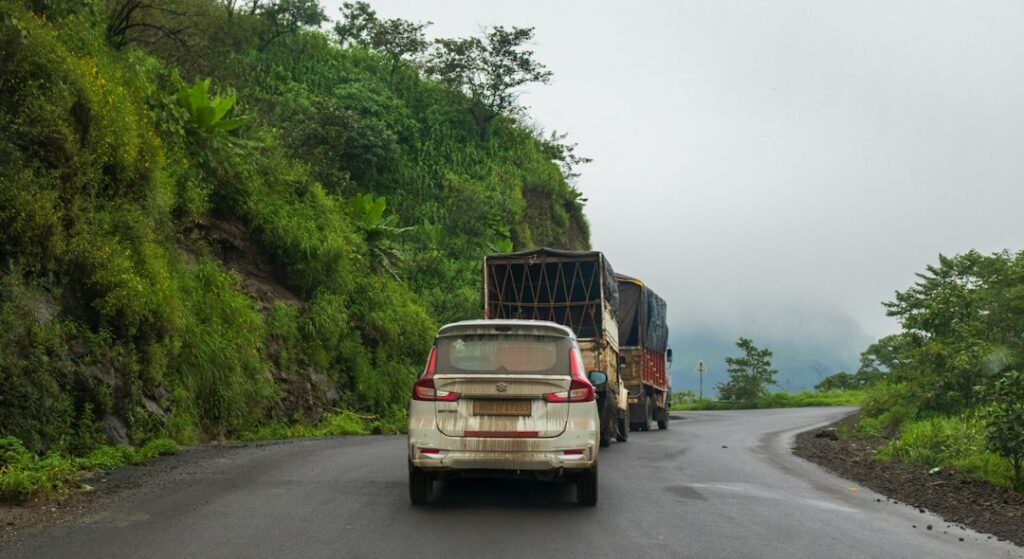
Diesel engines usually lose power on hills because the engine is not receiving enough fuel, air, or boost to maintain combustion under heavy load. A restricted fuel filter, clogged air filter, turbocharger problem, exhaust restriction, sensor fault, or transmission issue can all create similar symptoms.
For residents of Elkton, MD, the problem may appear during highway merging, towing, hauling, or climbing roads with changing grades. Cold weather, condensation in fuel, road salt, and long periods of short-distance driving can also contribute to drivability problems.
Why does a diesel engine lose power when climbing a hill?
A hill increases the engine’s workload. The vehicle must produce more torque to maintain speed, and the engine control system responds by supplying additional fuel and adjusting air pressure through the turbocharger.
If fuel delivery, airflow, turbocharger boost, or exhaust flow is limited, the engine cannot produce the power required. The result may feel like:
- Sluggish acceleration
- A need to shift into a lower gear
- Reduced speed while the accelerator is fully depressed
- Dark, gray, or white smoke
- Surging or hesitation
- A warning light or reduced-power mode
A small loss of speed on a steep grade can be normal, especially with a heavily loaded vehicle. A sudden or worsening loss of power is more likely to indicate a mechanical, fuel, electrical, or emissions-related problem.
Could a clogged fuel filter cause the problem?
Yes. A restricted fuel filter is one of the most common reasons a diesel engine performs poorly under load.
At light throttle, the engine may receive enough fuel to operate normally. During a hill climb, fuel demand rises sharply. A partially blocked filter may then prevent the high-pressure fuel system from receiving the volume it needs.
Possible clues include:
- Power loss that appears mainly during acceleration or hill climbing
- Engine hesitation after several seconds of heavy throttle
- Difficult starting or extended cranking
- Surging at higher speeds
- A filter that has not been changed according to the vehicle’s maintenance schedule
Water or contamination in the fuel can cause similar symptoms. Diesel fuel systems are sensitive to water, sediment, and microbial growth, particularly when fuel has been stored for long periods or condensation has entered the tank.
How can the air filter affect hill-climbing power?
A diesel engine needs a large volume of clean air. A heavily restricted air filter reduces airflow and can prevent the engine from burning fuel efficiently.
The problem may be more noticeable during a climb because the engine is already operating at high demand. A dirty filter may also increase smoke, reduce fuel economy, and cause slower turbocharger response.
Dust, pollen, insects, and road debris can collect in the intake system. In a region with changing seasons, filters may become restricted gradually rather than failing all at once. Inspecting the filter and air-intake housing is a simple early step, although a filter should not be judged only by appearance. Some filters can look reasonably clean while still having excessive restriction.
What role does the turbocharger play?
The turbocharger forces more air into the engine so it can burn additional fuel and produce more power. If the turbocharger is not building adequate boost, the engine may feel weak on hills even though it runs acceptably on level roads.
Common causes include:
- A split, loose, or collapsed charge-air hose
- Leaking intercooler connections
- A sticking wastegate or variable-geometry mechanism
- Damaged turbocharger components
- Faulty boost-control plumbing
- A sensor that reports incorrect air pressure
A hissing sound during acceleration, oily residue around an intake connection, excessive smoke, or a sudden loss of power may point toward a boost leak. However, a small amount of oil film inside diesel intake tubing can be normal, so residue alone does not prove that the turbocharger has failed.
Can the exhaust system restrict power?
Yes. A blocked exhaust system can make a diesel engine feel as though it cannot breathe out.
Modern diesel vehicles may use a diesel particulate filter, oxidation catalyst, exhaust gas recirculation system, and other emissions components. If soot accumulation becomes excessive or a component is damaged, exhaust backpressure can rise. The engine may then enter a reduced-power strategy to protect itself.
Signs may include:
- A warning message or check-engine light
- Regeneration attempts that occur frequently or do not complete
- Higher exhaust temperatures
- Poor fuel economy
- A noticeable power drop after extended driving
- Reduced power that remains after the vehicle is restarted

Short trips and extended idling can make it harder for some diesel emissions systems to complete normal cleaning cycles. If a warning indicates a severe filter restriction or overheating risk, continued hard driving can cause additional damage.
Could the transmission be the real cause?
Sometimes the engine is producing power, but the transmission is not transferring it properly.
A slipping transmission may cause engine speed to rise without a matching increase in vehicle speed. The vehicle can feel weak on hills because the available torque is not reaching the wheels efficiently.
This differs from a fuel or air problem:
- Engine power problem: engine speed may stay low, stumble, smoke, or fail to respond.
- Transmission problem: engine speed may flare upward while road speed increases slowly.
- Normal downshift: engine speed rises, but the vehicle continues climbing with steady acceleration.
Low transmission fluid, worn clutch components, torque-converter problems, or electronic faults can contribute to poor hill performance. A manual transmission may also have a slipping clutch, especially if the engine revs increase during a climb without corresponding acceleration.
What electrical or sensor problems can reduce power?
Diesel engines depend on sensors and electronic controls to measure air pressure, airflow, fuel pressure, engine temperature, and exhaust conditions. A faulty sensor can cause the control module to limit fueling or turbocharger operation.
A vehicle may enter “limp mode” or reduced-power mode when the computer detects a condition that could harm the engine or emissions system. Turning the engine off and restarting may temporarily restore normal operation, but that does not correct the underlying fault.
A diagnostic scan can reveal stored or pending trouble codes. The code is a starting point rather than a complete diagnosis. For example, a low-boost code may result from a leaking hose, a failed sensor, a control problem, or a turbocharger fault.
What should a driver check first?
Begin with observations that do not require disassembly:
- Note whether the problem occurs only on hills or also on level roads.
- Check whether the engine speed rises without a matching increase in speed.
- Look for warning lights, warning messages, or reduced-power indicators.
- Inspect visible intake hoses for loose clamps, splits, or disconnected sections.
- Check the service history for fuel-filter and air-filter replacement.
- Observe whether smoke is black, white, blue, or absent.
- Listen for new hissing, whining, rattling, or exhaust noises.
- Check for fuel, oil, coolant, or diesel exhaust fluid warnings if the vehicle uses those systems.
Do not open a pressurized fuel system or reach near a hot turbocharger or exhaust-treatment component. High-pressure diesel fuel can penetrate skin, and exhaust components may remain extremely hot after the engine is shut off.
When is loss of power a safety concern?
A diesel engine that gradually loses speed on a hill may simply need a downshift. A sudden loss of power in traffic, repeated stalling, heavy smoke, overheating, fuel leakage, or a flashing warning light requires greater caution.
Reduce the load, avoid aggressive acceleration, and move to a safe location when possible. Continued operation may be unsafe if the vehicle cannot maintain traffic speed, the engine temperature is rising, or the exhaust system is excessively hot.
For local drivers, winter temperatures and wet conditions can expose fuel-quality problems, frozen moisture, weak batteries, and marginal electrical connections. Towing, carrying heavy loads, and driving through repeated stop-and-go traffic can reveal a problem that remains hidden during unloaded cruising.
The most useful diagnostic detail is often the exact pattern: whether the power loss is sudden or gradual, whether it happens only under boost, whether smoke is present, and whether any warning appears. Those observations help distinguish a restricted filter from a turbocharger fault, transmission slip, exhaust restriction, or electronic reduced-power condition.